“The first time my daughter-in-law tried to charge me rent, she did it at my own kitchen table, with a smile so sweet it could have poisoned tea.
She was wearing a silk blouse I had paid for.
Not Gavin.
Not her.
Me.
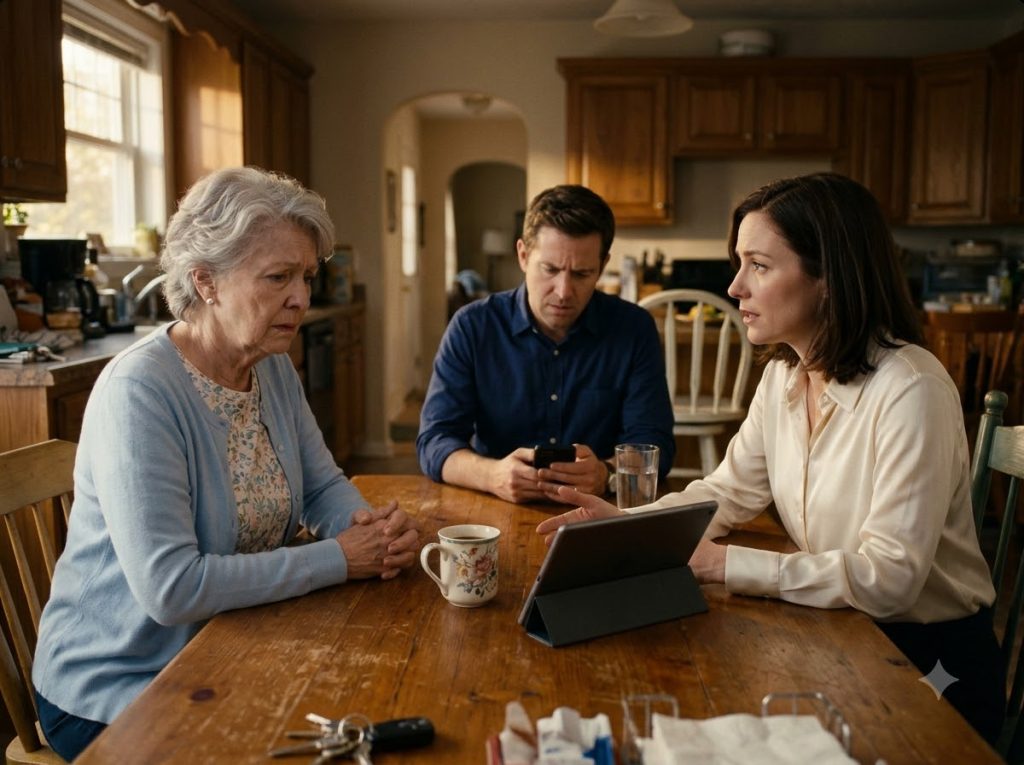
Sloane sat across from me like a landlord reviewing a lease, one red fingernail tapping against her iPad. Beside her, my son Gavin stared down at his phone, pretending he had not heard a single word.
Pretending his mother was just another old woman taking up space.
The kitchen smelled of coffee and lemon cleaner. Afternoon sunlight stretched across the heavy oak table my husband, Harold, had built with his own hands.
Gavin used to hide beneath that table during thunderstorms. I used to kneel beside him,
hold his small shaking hand, and whisper that he was safe.
That table had held birthday candles, Thanksgiving dinners, unpaid bills, school projects, family prayers, and Harold’s final cup of coffee before cancer took him from me.
It was not furniture.
It was my whole life.
And Sloane treated it like a boardroom desk.
“Elaine,” she said smoothly, barely lifting her eyes to mine, “we need to discuss your living arrangement.”
My living arrangement.
In the house where I had raised my son. In the bedroom where Harold had once held my hand and promised I would never be alone.
I folded my hands in my lap. “What about it?”
Sloane gave a small tired sigh, as if I had already disappointed her. “Inflation has been brutal. Groceries, utilities, insurance,
everything is going up. And my mother’s new health aide costs more than we expected.”
Gavin shifted in his chair, but his eyes stayed locked on his phone.
Sloane swiped across her iPad. “So starting on the first of next month, we’ll need you to pay eight hundred dollars a month in rent for your bedroom.”
For a moment, the only sound in the kitchen was the refrigerator humming.
I blinked. “My bedroom?”
She smiled. “Yes.”
“In my house?”
Gavin’s thumb froze above his screen.
Sloane leaned back, satisfied. She had been waiting for that question.
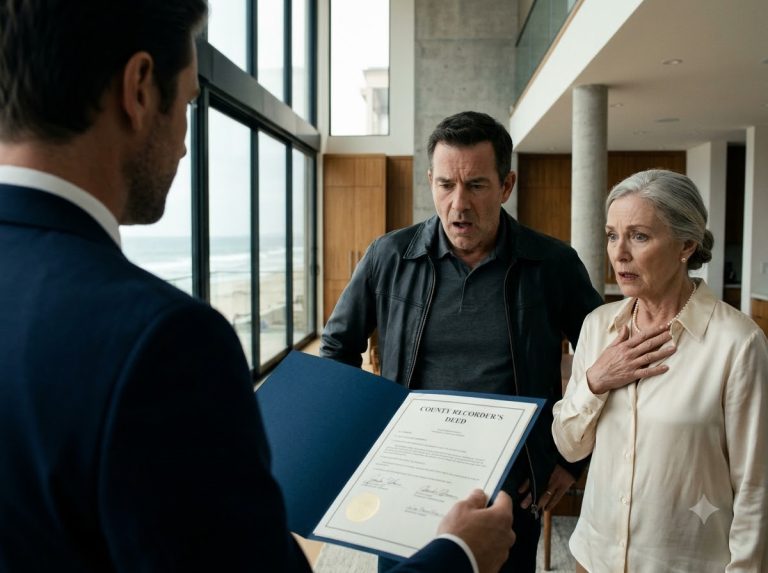
“Legally speaking, Elaine,” she said softly, “it isn’t your house anymore.”
The words hit harder than a slap.
She knew they would.
“You transferred the deed to Gavin last year,” she continued. “To avoid probate issues and unnecessary taxes.
Remember? So technically, Gavin and I carry the burden of ownership now. You should think of the rent as doing your fair share.”
My fair share.
I stared at my son.
Three years earlier, Gavin had come to me ashamed, broke, and desperate. He said he was drowning. I paid off credit cards. I covered car repairs. I bought groceries. I handled daycare bills, medical bills, and every emergency that arrived wrapped in panic and excuses.
When they had nowhere to go, I opened my home.
And now they wanted me to pay rent to sleep in the room where my husband had died.
“Gavin,” I said quietly.
He swallowed.
Sloane’s eyes snapped toward him like a warning.
He did not look at me.
He said nothing.
That silence broke something inside me more cleanly than shouting ever could have.
I thought I might cry, but not because of the money. Eight hundred dollars was not the wound.
Betrayal was.
The polished cruelty. The careful planning. The way my own son could sit there while his wife stripped the last piece of dignity from me inside the home I had built with love, grief, and sacrifice.
But the tears never came.
Instead, something colder settled over me.
Calm.
Clear.
Almost dangerous.
“I understand,” I said.
Sloane relaxed, mistaking my quiet voice for surrender. “Good. I’m glad we can be mature about this.”
I stood and smoothed my cardigan. “Excuse me. I’m tired.”
Neither of them tried to stop me.
In my bedroom, I locked the door and stood in the silence. Harold’s photograph smiled from the nightstand. My quilts were folded neatly. The cedar chest sat at the foot of the bed. A little lamp Gavin had given me for Mother’s Day when he was ten glowed softly in the corner.
I allowed myself exactly one minute to hurt.
Then I opened my laptop.
At first, the plan was simple.
Leave.
Sloane did not know about the lakehouse.
No one did.
Harold had bought it decades earlier through a small family trust, long before Gavin married Sloane, long before debt and manipulation turned my home into a place where I felt like an unwanted guest.
I could leave before sunrise.
I could disappear into peace.
But as my fingers hovered over the keyboard, another thought came.
If I simply left, Sloane would win.