A contractor’s call ended, but I remained sitting on the edge of my bed, staring at the wall.
Sarah had contacted him more than a week before the moving truck arrived.
She had asked for measurements.
She had discussed knocking down walls.
She had apparently spoken as though she were the person making decisions about my mother’s cottage.
And then I remembered something else.
Three weeks earlier, Sarah had casually asked me, “Mom, where exactly do you keep the paperwork for Grandma’s house?”
At the time, I hadn’t thought anything of it.
I had told her it was in my home office, inside a locked filing cabinet.
She had smiled and changed the subject.
Now, the memory made my stomach turn.
I called my contractor back.
“Tell me exactly what Sarah said.”
He hesitated.
“She told me you wanted the renovation finished quickly because you were planning to let her and Greg stay there permanently. She said you didn’t want to discuss it yet because you wanted it to be a surprise.”
“A surprise?”
“Yes.”
I closed my eyes.
That wasn’t a misunderstanding.
That was a story.
And Sarah had been telling it to other people long before she told it to me.
I drove to the cottage that morning.
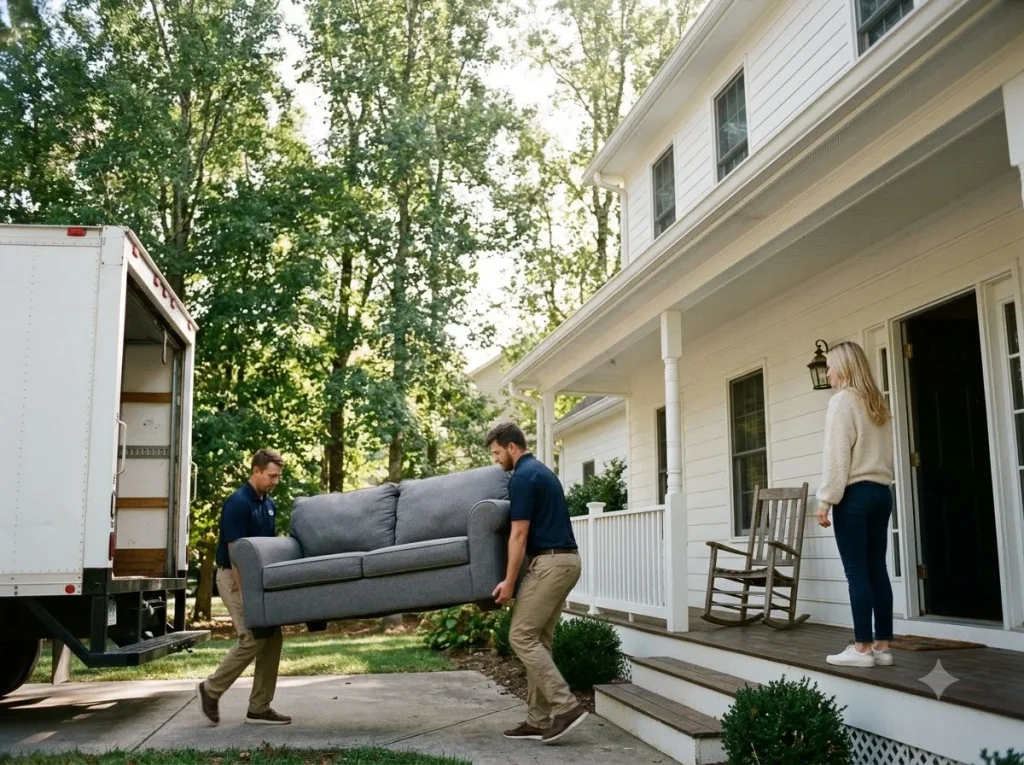
The moving truck was gone. The lawn was covered in tire tracks, and one of the porch planters had been knocked over.
Inside, I walked slowly through every room.
My mother’s old cottage had always been more than a property to me.
It was where I had spent summers as a child.
It was where my mother taught me to make blackberry pie.
It was where David and I had once spent an entire rainy weekend repairing a broken window because neither of us wanted to pay someone else to do it.
After David died, I couldn’t bear the thought of selling it.
So I renovated it quietly.
New floors.
New plumbing.
A new kitchen.
A repaired roof.
Fresh paint.
I had never told Sarah the final cost.
Not because I was hiding money from my daughter.
Because I knew exactly what would happen if she knew.
She would see the cottage as an opportunity.
And apparently, she had.
I opened my mother’s old desk drawer and found something I hadn’t touched in years.
An envelope.
Inside was a handwritten note from my mother.
It wasn’t a legal document.
It didn’t give me any new rights.
But the words were enough to make me sit down.
“This little house belongs to you now. Don’t let anyone make you feel guilty for protecting what you built.”
My mother had written it shortly before she died.
I had forgotten about it.
Until that morning.
Then my phone rang.
It was Sarah.
I almost didn’t answer.
“Mom, we need to talk.”
“No,” I said. “You need to talk. I’ve been listening for years.”
Silence.
Then she said, “Greg and I have nowhere to go.”
“You had somewhere to go yesterday.”
“Our lease ended.”
“You knew that for months.”
“We thought you’d help us.”
“I have helped you.”
“You’re my mother!”
The words came out like an accusation.
I looked around the cottage.
“Yes,” I said quietly. “I am your mother. That doesn’t make me your landlord, your bank, or the owner of every solution to your life.”
She started crying.
For years, her tears had been the fastest way to make me surrender.
This time, I waited.
Finally she whispered, “So you’re really going to leave us homeless?”
“No. I’m going to leave you responsible for the choices you made.”
She hung up.
I thought that was the end of it.
It wasn’t.
That afternoon, Linda called again.
“There’s something you should know.”
Her voice was different this time.
More serious.
She told me that several weeks earlier, Sarah had come to the neighborhood and introduced herself to two of my mother’s old neighbors.
“She told them the cottage was being transferred to her,” Linda said.
My hand tightened around the phone.
“What exactly did she say?”
“She said you were getting older, that you didn’t want to deal with the property anymore, and that you had decided to give it to her and Greg.”
I felt cold.
Sarah hadn’t simply moved furniture.
She had been preparing the neighborhood to accept a false version of reality.
Then Linda added one more thing.
“She also asked whether anyone knew where your mother kept the old property records.”
I drove straight home.
I opened my filing cabinet.
The deed was there.
The tax records were there.
The renovation invoices were there.
But one document was missing.
The original copy of my mother’s estate paperwork.
I searched every drawer twice.
Nothing.
Then I remembered something.